

What Is Data Enrichment? Your Practical Guide

Data enrichment is the process of enhancing raw, internal data by merging it with information from external, third-party sources. Think of it like this: you have a basic sketch of a person—that's your raw data. Data enrichment adds the color, shading, and background, turning that simple sketch into a complete, detailed portrait.
It transforms spotty, incomplete customer records into full-fledged profiles, giving you a much clearer, more useful picture of your audience. For businesses, this means turning a simple contact list into a strategic asset.
What Is Data Enrichment A Simple Explanation

At its heart, data enrichment is about adding new layers of detail to your existing database from a trusted, outside source. Let's say your CRM contains a customer list with just names and email addresses. That's a good start, but it doesn't tell you much. You know who they are, but you don’t really know anything about them.
Enrichment fills in those critical gaps. It takes that basic contact info and fleshes it out with firmographic, demographic, and behavioral details. Without this kind of upkeep, your data gets stale—fast. According to industry reports, B2B data decays at a startling rate of over 30% per year as people change jobs and companies evolve, making data enrichment a crucial, ongoing process.
From Raw Data to Rich Profiles
The whole process kicks off with a piece of information you already have, like an email address or a company website. This data point is then matched against a massive external database. When it finds a match, it pulls in additional information and appends it to your original record. It’s a simple action with a huge impact.
Data enrichment is what turns your CRM from a simple address book into a powerful intelligence tool. You go from just managing contacts to truly understanding your customers, which paves the way for smarter marketing, more effective sales, and better service all around.
To show this in action, here’s a quick look at how a basic record can be completely transformed.
Data Enrichment Transformation Before and After
| Data Point | Before Enrichment (Raw Data) | After Enrichment (Enriched Data) |
|---|---|---|
| Contact Name | Jane D. | Jane Doe |
| [email protected] | [email protected] | |
| Company | Acme Corp | Acme Corporation |
| Job Title | – | VP of Marketing |
| Company Size | – | 501-1,000 employees |
| Industry | – | SaaS / Enterprise Software |
| Location | – | San Francisco, CA |
| Social Profile | – | linkedin.com/in/janedoe |
As you can see, what started as a bare-bones contact is now a detailed profile ready for targeted outreach. This is the difference between a cold call and a warm, informed conversation.
This enriched view can give you all sorts of valuable details, such as:
- Demographics: Attributes like age, gender, location, and income level, which are incredibly useful for B2C campaigns.
- Firmographics: Key B2B details like company size, industry, annual revenue, and even the technology they use (their tech stack).
- Behavioral Signals: Information on past purchases, website interactions, social media activity, or even buying intent signals from across the web.
With this deeper well of information, your teams can stop guessing and start making data-driven decisions that lead to real business growth.
How Data Enrichment Actually Works
So, how do you turn a simple customer record into a goldmine of information? It’s not magic, but it is a methodical process. It all starts with one piece of information you already have and builds from there.
At the heart of it all is a unique identifier. Think of this as the master key. It could be an email address, a phone number, or a company’s web domain. This single data point is what unlocks a trove of new information.
An enrichment tool takes this key, searches a massive third-party database for a match, and once it finds one, it adds a bunch of new, valuable details back to your original record. It sounds straightforward, but getting it right depends on a few critical steps to make sure the final data is clean, accurate, and genuinely useful.
The Three Core Stages of Enrichment
You can really break the whole thing down into three main phases. Each one is crucial for turning spotty data into a strategic advantage. If you cut corners on any of them, you risk ending up with a profile that’s just plain wrong.
-
Data Standardization and Cleansing: Before you can add new info, you have to tidy up what you’ve got. This first step is all about fixing typos (turning "Gogle" into "Google"), creating consistent formats (like making sure all states are two-letter codes, so "CA" instead of "Calif." or "California"), and merging any duplicate records. You need a clean foundation to build on, otherwise, you're just adding good data to a bad base.
-
Record Matching: Once your data is clean and standardized, the real matching begins. The system takes your unique identifier—say, the email "[email protected]"—and scours the provider’s database for a perfect match. The goal is to confidently link your contact to their company profile, Acme Corporation. This process relies on sophisticated algorithms to ensure a high degree of accuracy.
-
Data Appending: This is the payoff. After a match is confirmed, new data points are "appended" (a fancy word for "added") to your original record. This is where a name and email suddenly transform into a complete profile, filled out with their job title, the company's size, industry, location, and more.
A good way to think about it is like a detective solving a case. The unique identifier is the main clue (Step 1). The detective then uses that clue to find a match in the official records (Step 2). Finally, they pull all the important details from that file and add them to their case report, creating a full picture (Step 3).
Automation Is the Secret Sauce
Trying to do all this manually for thousands, let alone millions, of contacts? It's simply not possible. It would take a single person months to enrich just 1,000 records. This is where modern data enrichment tools come in. They automate the entire workflow, often working in real time.
The moment a new lead pops into your CRM, the enrichment process can kick off automatically. Within seconds, what was once a bare-bones contact is now a fully fleshed-out profile. This is what makes the process work at scale for any business.
Plus, automation ensures your data is continuously updated. B2B data decays shockingly fast—over 30% annually—as people change jobs and companies evolve. Automated tools keep things fresh, ensuring your customer insights stay accurate and ready to use.
Understanding the Key Types of Data Enrichment
Not all data adds the same kind of value. Think of it like a painter's palette – an artist uses different colors for different effects, and in the same way, businesses use specific types of data enrichment to achieve their goals. Getting a handle on these categories is the first step toward building a data strategy that actually moves the needle.
The enrichment process itself is pretty straightforward. You take your existing, cleaned-up data and match it against high-quality external sources to pull in new, valuable details.
This infographic breaks down the simple, three-step flow of how raw data gets transformed.
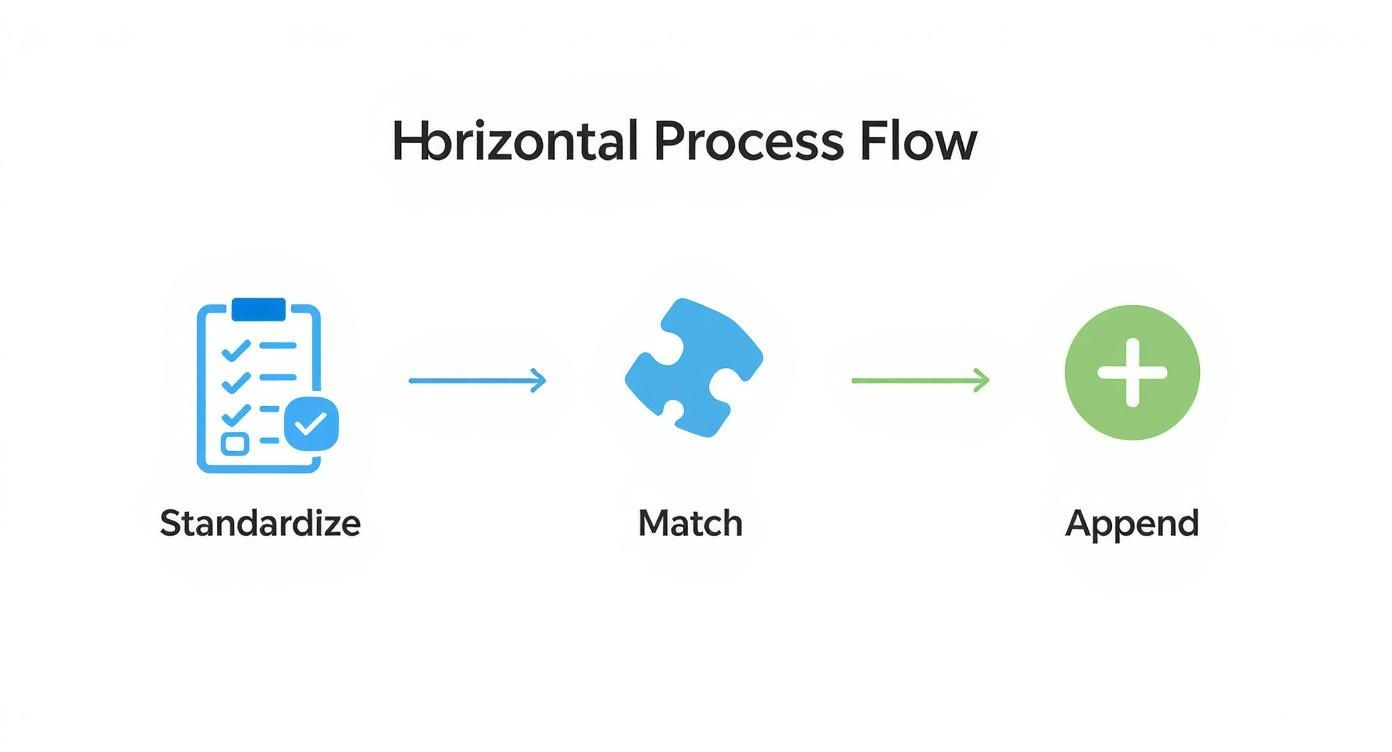
As you can see, successful enrichment isn't just about piling on more information. It starts with standardizing what you already have, finding the right match in a third-party database, and only then adding the new details.
Firmographic and Demographic Data
For any B2B company, firmographic data is the absolute gold standard. It’s all about the company-level details that help your sales and marketing teams figure out who to talk to and how to segment their accounts.
- What it includes: Things like company size, industry, annual revenue, location, and even the technologies they use (their tech stack).
- Real-world example: Imagine a salesperson at a software company gets a new lead from a webinar. By enriching that single email address, they instantly learn the lead's company has 1,500 employees, operates in the logistics industry, and is already using a competitor's product. Boom. They can now prioritize this high-value lead and tailor their pitch perfectly.
On the other side of the coin, B2C businesses lean heavily on demographic data, which paints a picture of individual consumers.
- What it includes: Age, gender, income level, marital status, and education.
- Real-world example: An online fashion retailer can enrich its customer list to see age and income brackets. This allows them to create laser-focused email campaigns—showing luxury items to high-income earners and trendy, affordable styles to younger shoppers. The result is better engagement and more sales.
The core idea is simple: firmographics help you understand the company, while demographics help you understand the person. Both are essential for creating experiences that feel relevant and personal.
Geographic and Behavioral Data
Geographic data adds location-based context to your records, which is crucial for everything from localized marketing and sales territory planning to basic logistics.
- What it includes: Country, state, city, zip code, and even time zone.
- Real-world example: A national restaurant chain uses geographic enrichment to send promotional offers for a new menu item only to customers living within a 10-mile radius of specific locations. This maximizes their marketing spend and drives real, local foot traffic.
Finally, there’s behavioral data, which gives you a window into what your customers have actually done. It's one of the most powerful predictors of what they’ll do next.
- What it includes: Purchase history, website browsing activity, email engagement, and social media interactions.
- Real-world example: An e-commerce brand enriches customer profiles with their browsing history. When a user who repeatedly viewed a specific pair of hiking boots logs in, the homepage automatically features a "Recommended for You" section with those exact boots and related gear. It creates an irresistible, personalized shopping experience that feels almost like magic.
This growing reliance on data is why the global data enrichment tool market is projected to hit around USD 5 billion by 2025. This explosion reflects the massive demand from businesses for tools that can make their data more accurate and actionable. You can learn more about the data enrichment market trends and see where the industry is headed.
Why Data Enrichment Is a Business Game-Changer
It’s one thing to understand the what and how of data enrichment, but the real magic happens when you see the results. Simply put, enriched data lets you swap guesswork for strategy, completely changing how you talk to customers and prospects.
This isn't just about cleaning up a spreadsheet; it's about building a true 360-degree view of your customer. When you layer demographic, firmographic, and behavioral details onto the basic info you have, you start to see the whole person. You learn who they really are, what they actually need, and when they might be ready to buy.
That deeper understanding is the bedrock of almost every major business win.
Supercharge Your Sales and Marketing
The most immediate impact you'll see is in lead scoring. Your sales team can finally stop chasing dead-end leads and focus their energy on the ones that matter. For example, a study by Forrester found that organizations with advanced lead nurturing programs see 50% more sales-ready leads at a 33% lower cost. Imagine a new lead comes in, and it's instantly fleshed out with company size, industry, and the person's real job title. Your reps can see—in a flash—if it's a golden opportunity.
This is a huge piece of what makes sales intelligence so powerful. It gives your team the context they need to have genuinely helpful conversations. To see how these concepts fit together, check out our guide on what is sales intelligence.
Meanwhile, your marketing team gets the keys to hyper-personalization that actually works at scale. With rich data, you can:
- Improve Segmentation: Go beyond broad categories. Create laser-focused audience segments for campaigns that speak directly to a user's specific role and challenges.
- Boost Conversion Rates: Tailor your website content, product suggestions, and email offers to what you know about the visitor, making it much easier for them to say "yes."
- Increase Customer Lifetime Value: When you truly get your customers, you can anticipate their next move, solve problems before they happen, and drastically reduce churn.
Drive Efficiency and Stay Compliant
The benefits go far beyond sales and marketing. A huge advantage is the boost it gives your operational efficiency. Clean, accurate, and complete data cuts down on hours of manual research, prevents costly errors in campaigns, and just makes internal processes run smoother. In fact, many strategies for improving operational efficiency start with a foundation of solid data.
By turning raw data into actionable intelligence, data enrichment moves beyond being a simple technical task. It becomes a core driver of revenue, efficiency, and competitive advantage in any market.
A commitment to data quality also keeps you on the right side of privacy rules like GDPR. Regulations demand that you maintain accurate, up-to-date customer records, and enrichment is a practical way to ensure your database is both current and compliant.
This growing importance is why the market for data enrichment solutions, valued at USD 6.95 billion in 2024, is expected to explode to USD 17.48 billion by 2035.
Alright, let's move from the what to the how. Theory is great, but data enrichment truly comes to life when you see it working in the real world. This is where a simple list of contacts transforms into a strategic goldmine.
Let's look at a couple of scenarios where this process makes all the difference.
Boosting B2B Sales with Smarter Lead Prioritization
Picture a B2B software company. They just ran a successful webinar and now have a list of hundreds of new sign-ups. Great, right? The problem is, it's just a long list of email addresses. The sales team has no clue which ones are hot prospects and which are just tire-kickers. They end up wasting countless hours digging through LinkedIn or chasing dead ends.
The Problem: The sales team has a pile of names and emails, but zero context to focus their efforts.
The Solution: This is a classic case for data enrichment. The company plugs an automated enrichment tool into its CRM. Now, every time a new contact comes in, the tool automatically adds key details like:
- Company Size
- Industry
- The contact's actual Job Title
- Annual Revenue
- Geographic Location
The Result: The game completely changes. That generic list is now a powerful, sortable database. The sales team can immediately filter for decision-makers at enterprise companies in their sweet-spot industries.
Suddenly, "[email protected]" becomes Jane Doe, VP of Marketing at a 500-person tech company—a top-tier lead. This targeted approach is a massive efficiency booster, letting the team connect with their best prospects first. When you apply data enrichment to your sales and marketing, you can seriously level up your B2B lead generation strategies.
Personalizing the E-commerce Experience
Now, think about an online store. They’re stuck in a rut, blasting the same generic sale emails to everyone. Unsurprisingly, their open rates are terrible, and nobody's really engaging. They know they should be personalizing, but they don't have the data to do it well.
The Problem: Their marketing is one-size-fits-all, so it resonates with almost no one.
The Solution: The retailer starts enriching its customer profiles with behavioral and demographic data. By tracking what a customer browses and buys, they can figure out what they’re actually interested in. Adding details like age and location adds another layer of insight.
Data enrichment allows an e-commerce store to move from broadcasting a message to having a one-on-one conversation with each customer, scaled across their entire audience.
The Result: The entire shopping experience is transformed. A customer who keeps looking at hiking boots now lands on a homepage showcasing new outdoor gear. Emails are tailored to their specific interests, not just a generic "20% off everything" blast.
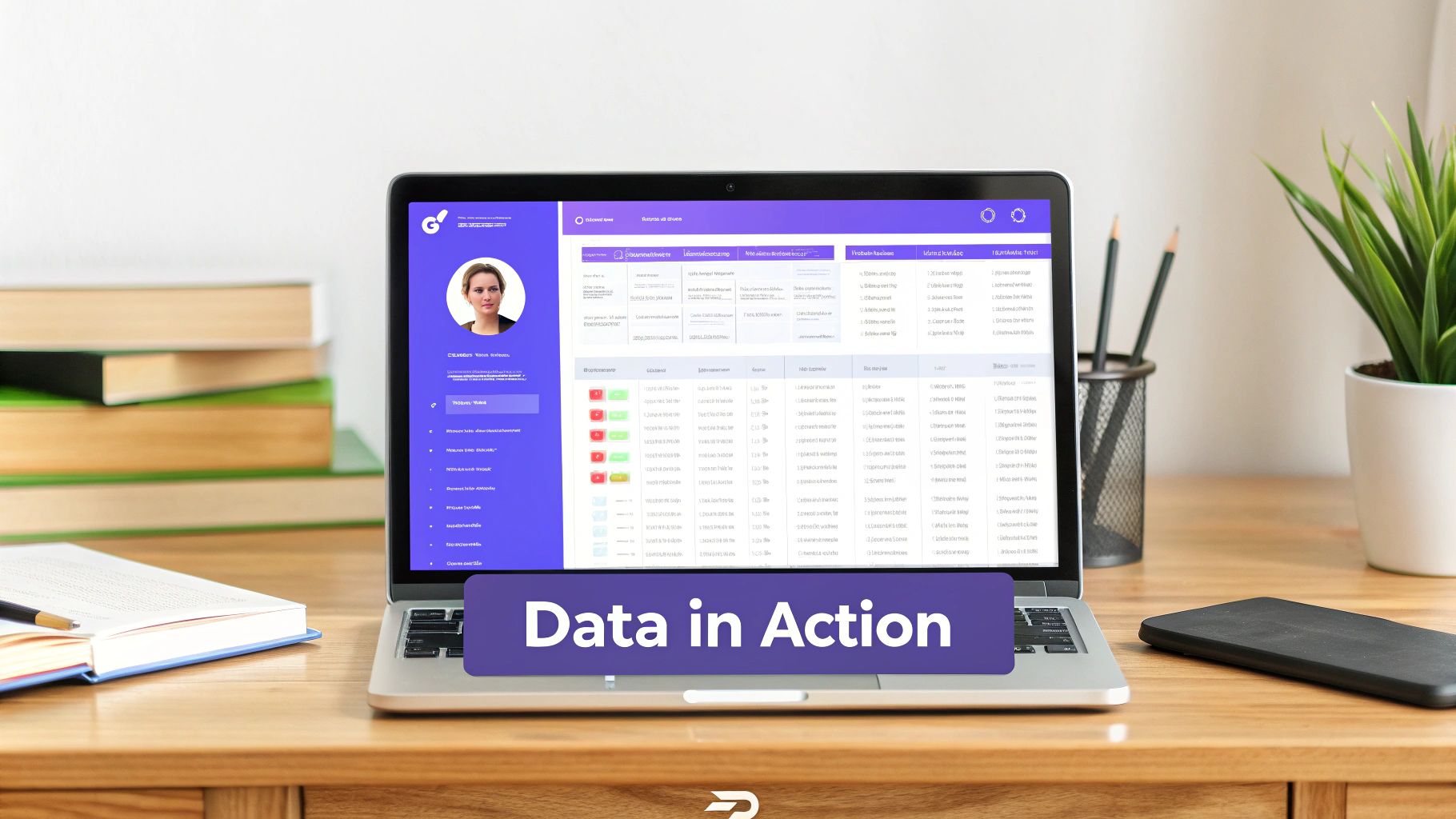
This simple shift leads to a 20% increase in click-through rates. By anticipating what customers want, the store builds real loyalty and drives more sales. Of course, none of this works if your contact info is bad, which is why the first step is always ensuring your data is clean. You can learn more about how to validate email addresses to get that foundation right.
How to Choose the Right Data Enrichment Solution
Picking the right data enrichment solution isn't just another software purchase. It’s a decision that will directly shape how well you understand your customers and how effective your sales and marketing efforts become. The market is crowded, and it's easy to get lost in a sea of features. The trick is to tune out the noise and zero in on what truly matters for your business.
First and foremost, you have to grill potential vendors about the accuracy and freshness of their data. Where do they get their information? How often do they refresh it? A provider is only as good as its sources. Stale data is worse than no data at all—it leads to bounced emails, dead-end calls, and a whole lot of wasted time.
This obsession with quality is exactly why the industry is booming. In 2023, the data enrichment market was already valued at around USD 1.5 billion, and experts project it will explode to nearly USD 5.8 billion by 2032. This isn’t just hype; it’s a reflection of how seriously companies are taking data-driven strategy. You can dig deeper into the growth of the data enrichment market to see where things are headed.
Evaluating Key Vendor Capabilities
Beyond the data itself, seamless integration is an absolute must. If a tool doesn’t play nicely with your current tech stack—especially your CRM and marketing automation platforms—it's going to create more problems than it solves. You need a solution that feels like a natural extension of your existing workflow, not a clunky add-on. Look for native integrations or a robust API to prevent creating new data headaches.
Compliance is the other non-negotiable. With privacy laws like GDPR and CCPA getting stricter, you can't afford to be careless. You have to be certain that your data provider is sourcing its information ethically and legally.
Partnering with a non-compliant vendor is a massive gamble. You're not just risking a fine; you're putting your company's reputation on the line. Always demand to see their compliance documentation and data processing agreements. It’s your best defense.
To cut through the sales pitches, arm yourself with a few direct questions for any vendor you're considering:
- Data Accuracy: Can you guarantee a specific accuracy rate, and how do you prove it?
- Integration: Do you have native, out-of-the-box integrations for our core systems like Salesforce or HubSpot?
- Compliance: What specific steps do you take to ensure full compliance with GDPR, CCPA, and other major privacy regulations?
- Support: What does your support look like? Will we have a dedicated person to help us get started and troubleshoot issues later on?
Making a Confident Decision
Finally, let's talk about pricing. Some tools charge you for every record you enrich, while others offer monthly or annual subscriptions. There's no single "best" model—it all depends on your expected usage and budget. The key is to find a transparent pricing structure that scales with you, without any surprise fees. You're looking for a long-term partner, not just a transactional tool.
Taking the time to make a thoughtful choice pays off big time. It equips your team with the reliable, actionable data they need to hit their goals and drive real growth. To see how the top players stack up, take a look at our detailed breakdown of the best data enrichment tools on the market.
Answering Your Top Questions About Data Enrichment
As you start to explore data enrichment, a few questions always pop up. Let's tackle them head-on to clear up any confusion and make sure you're ready to build a solid strategy.
What's the Difference Between Data Enrichment and Data Cleansing?
It's easy to mix these two up, but they play very different roles. Think of it like renovating a house.
Data cleansing is like making repairs. You're fixing leaky faucets, patching drywall, and giving everything a fresh coat of paint. You’re working with what you already have—correcting typos ("Jhon" to "John"), standardizing state abbreviations ("CA" not "Calif."), and deleting duplicate entries. It’s all about getting your existing foundation solid and reliable.
Data enrichment, on the other hand, is like building a new extension. You're adding brand-new rooms, features, and value to the house. This process appends new information from outside sources to your records, turning a basic contact list into a rich set of detailed profiles.
You need both. Cleansing ensures your data is accurate; enrichment makes it powerful.
Is Data Enrichment Legal? What About Privacy Laws?
Absolutely, as long as it's done the right way. In the age of GDPR and CCPA, you can't afford to guess. Compliance isn't just a box to check; it’s a fundamental requirement for any legitimate data enrichment effort.
This is where your choice of vendor becomes critical. A reputable partner will be completely transparent about their data sources and compliance practices. They should be able to show you exactly how they gather and process information ethically, so you can be confident you aren’t exposing your business to risk.
Don't be shy about grilling potential vendors on their compliance. Partnering with someone who cuts corners here is a massive liability that can cost you dearly in fines and lost trust.
Can't I Just Do This Myself?
You could, but I wouldn't recommend it. Trying to enrich data manually is like trying to dig a foundation with a garden trowel. A salesperson could spend an entire day hunting down details for a handful of leads on LinkedIn, and there's no guarantee the information will even be accurate.
This is exactly what automated tools are built for. They can process thousands, or even millions, of records in the time it takes to grab a coffee, all with a level of accuracy and consistency a human just can't match. This frees up your team to do what they do best: actually using the data to build relationships and close deals.
How Often Should I Be Enriching My Data?
Data enrichment isn't a "set it and forget it" task. It's more like tending a garden—it needs constant attention. Business data goes stale surprisingly fast. People switch jobs, companies get acquired, and phone numbers change. In fact, some studies show that B2B data can decay by as much as 30% every year.
To fight back against this "data decay," you need a regular enrichment schedule. For some businesses, continuous, real-time enrichment is the way to go. For others, a quarterly refresh is enough. The key is to keep your data fresh, accurate, and valuable over the long haul.
Ready to stop chasing stale leads and start engaging high-intent startups? FundedIQ delivers hand-curated lists of recently funded companies with verified decision-maker contacts directly to your inbox. Get the actionable intelligence you need to accelerate your deal flow today. Explore our plans at FundedIQ.