


7 Mental health startups You Should Know

The global mental health market is projected to reach over $500 billion by 2030, a clear signal of the massive investment and innovation pouring into this critical sector. In 2021 alone, venture capital funding for mental health startups surged to a record $5.5 billion, demonstrating investor confidence. As this capital continues to fuel growth, a new wave of mental health startups is emerging, creating significant opportunities for agencies, job seekers, and investors. However, identifying the most promising, well-funded companies and finding a relevant entry point can be a significant challenge. This roundup cuts through the noise.
We’ve compiled a comprehensive list of leading venture-backed mental health startups, providing the actionable intelligence you need to engage them effectively. This isn't just a list of names; it's a strategic brief designed to drive action. For each company, you will find a detailed snapshot, including their latest funding rounds, key investors, and current employee count, giving you a clear picture of their growth trajectory and stability. For example, knowing a startup just closed a Series C round often indicates an impending expansion in engineering, marketing, and sales departments.
More importantly, we provide verified decision-maker contacts and specific outreach hooks tailored to their current activities. Whether it's a recent hiring spike indicating a need for recruitment services, a major product launch prime for a marketing push, or a specific technology stack that signals a need for automation experts, these insights offer a direct path to a relevant conversation. For instance, a company adopting Salesforce and Marketo is a prime target for a marketing automation consultancy.
This article is your guide to understanding and connecting with the key players shaping the future of mental healthcare. Each entry is structured for quick scanning, complete with direct links and screenshots, helping you pinpoint the best opportunities for your specific needs without sifting through pages of generic information. Let's dive into the companies leading the charge.
1. BetterHelp
As one of the most recognized names in the teletherapy space, BetterHelp has established a dominant market position by focusing on accessibility and convenience. This platform, owned by Teladoc, operates as a massive online portal connecting users with a network of over 30,000 licensed therapists across the U.S. for a flat, subscription-based fee. Its primary value proposition is speed: users can often get matched and start therapy within 24-48 hours, sidestepping the long wait times, which can exceed several weeks in traditional therapy settings, and the complexities of insurance coverage.
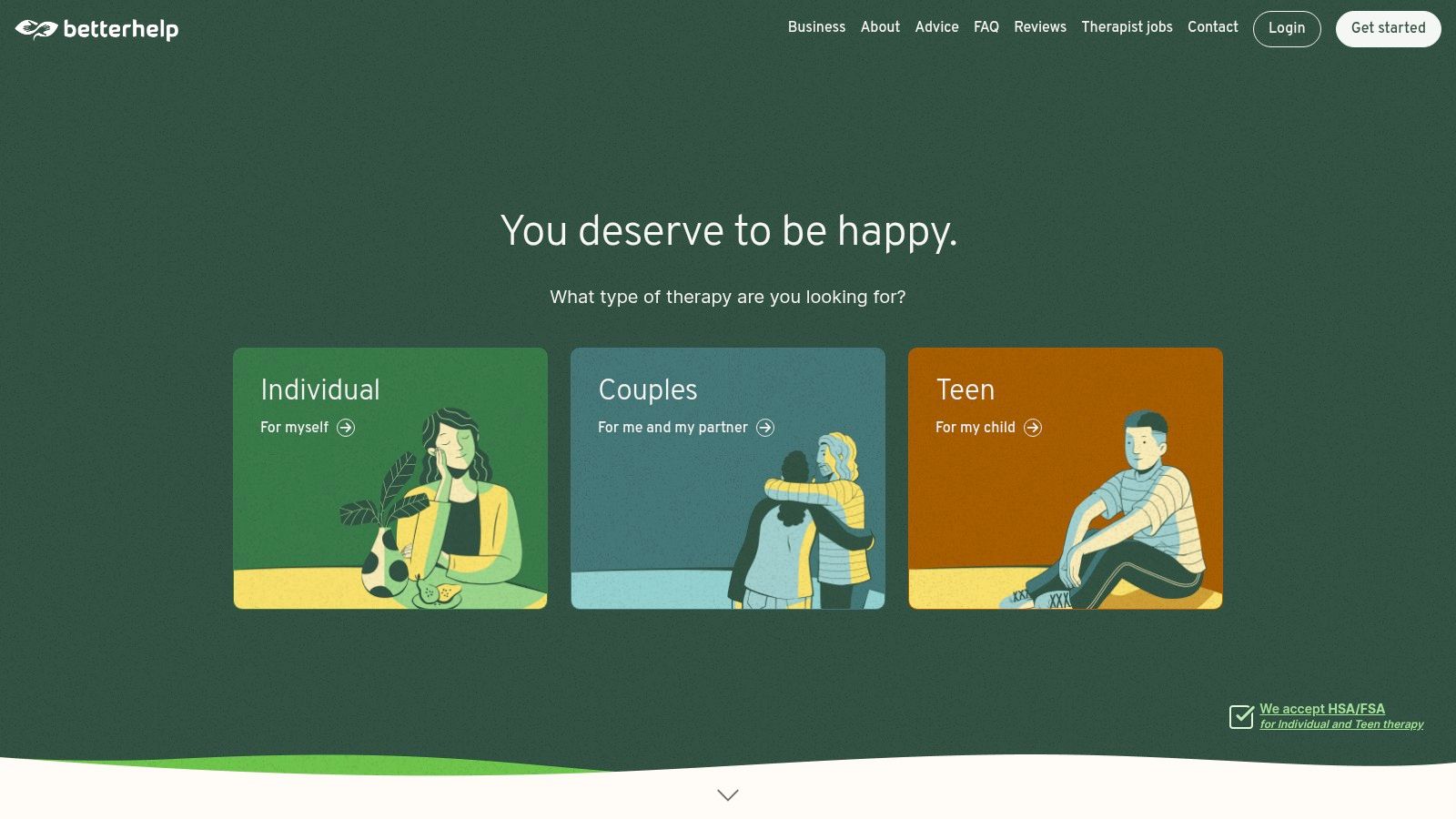
For growth and performance agencies, BetterHelp's aggressive direct-to-consumer marketing strategy, particularly across social media and influencer channels, provides a rich case study in scaling a digital health service. For example, their widespread podcast sponsorships have become a textbook example of audio-based performance marketing. The platform's extensive A/B testing on its intake funnel and landing pages offers valuable insights into user conversion in the health-tech sector.
Platform Features & User Experience
BetterHelp’s model is built around a comprehensive subscription package. The user journey begins with an extensive questionnaire that gathers information about their needs, preferences, and goals. This data is then used by their algorithm and matching experts to pair the user with a suitable therapist from their vast network.
- Communication Channels: Subscribers get one live 30-45 minute session per week via video, phone, or live chat, plus the ability to send unlimited text, audio, or video messages to their therapist anytime. Therapists typically respond to messages once or twice a day on weekdays.
- Included Resources: The subscription also includes access to group webinars on topics like anxiety and relationships, as well as an in-app journaling feature.
- Pricing & Access: Costs typically range from $70 to $100 per week, billed every four weeks. While it's generally a direct-to-consumer, self-pay service, payments can be made with HSA/FSA accounts. This direct payment model makes it one of the most prominent mental health startups operating outside traditional insurance networks.
Agency Opportunities & Outreach Hooks
BetterHelp’s scale presents significant opportunities. Recruitment agencies should monitor their frequent hiring for licensed therapists (LCSW, LMFT, LPC, PsyD) as they constantly expand their provider network to meet demand. Tech and automation experts can note their tech stack, which includes tools like Mixpanel for analytics and AWS for infrastructure, suggesting a need for services related to data management, cloud optimization, and user engagement automation.
Key Insight: A notable challenge and opportunity stems from their 2023 FTC settlement over user data privacy. This event creates a clear opening for creative and branding agencies to pitch campaigns focused on rebuilding trust, enhancing transparency, and communicating a renewed commitment to user privacy, for example, by creating a "Privacy Center" on their website.
Website: https://www.betterhelp.com/
2. Talkspace
Talkspace pioneered the "therapy-in-your-pocket" model, building its brand on the accessibility of text-based messaging with licensed therapists. As a publicly traded company, it represents one of the major players in the digital mental health space, differentiating itself by integrating psychiatry and medication management alongside traditional talk therapy. Its key value proposition lies in its tiered subscription plans and its significant effort to work within the U.S. insurance system, covering over 100 million Americans through employer and health plan partnerships. This makes it a viable option for users with in-network benefits.
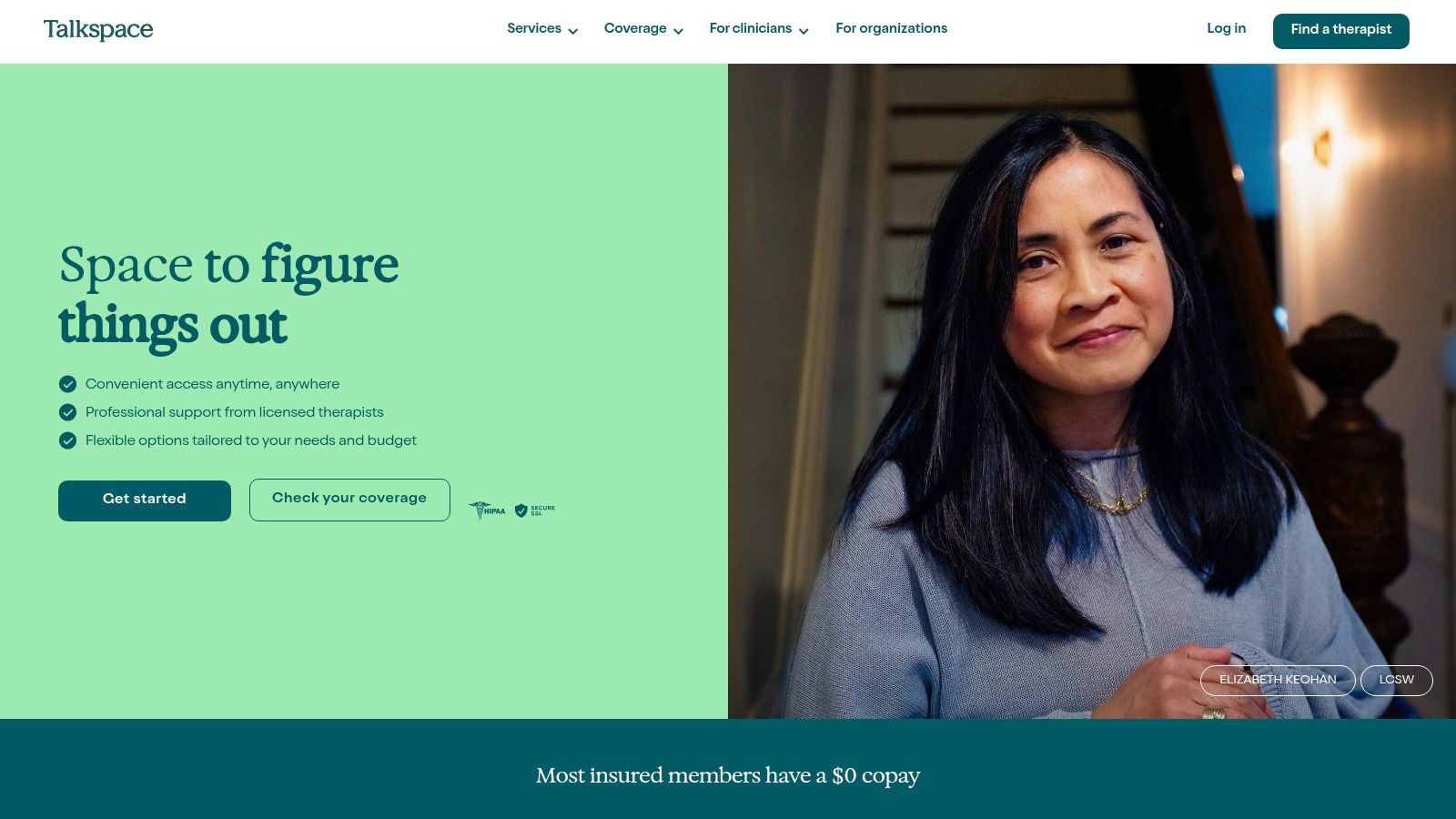
For performance agencies, Talkspace's hybrid B2C and B2B (Talkspace for Business) model offers a compelling study in diversified growth strategies. The company's partnerships with employers and health plans provide a distinct user acquisition channel compared to the purely direct-to-consumer approach of some competitors, creating unique opportunities for targeted marketing campaigns focused on corporate wellness decision-makers.
Platform Features & User Experience
Talkspace's user journey starts with a brief assessment, after which users are presented with several therapist options to choose from, giving them more agency in the matching process. The platform is known for its clean user interface and its clear delineation between therapy and psychiatry services.
- Communication Channels: The core offering revolves around unlimited messaging (text, audio, video). Higher-tier plans add one 30-minute live video session per week.
- Included Resources: A key differentiator is its integrated psychiatry service. Users can book initial psychiatric evaluations and follow-up medication management sessions, often with transparent à-la-carte pricing.
- Pricing & Access: Out-of-pocket costs start around $69 per week for messaging-only plans, increasing with the addition of live sessions. Critically, Talkspace partners with a wide range of U.S. health insurers like Cigna and Aetna, making it one of the most insurance-friendly mental health startups. The growth of such insurance partnerships highlights broader venture capital investment trends favoring startups that can integrate with existing healthcare systems.
Agency Opportunities & Outreach Hooks
Talkspace's position as a public company (listed on Nasdaq as TALK) means its financial reports and strategic shifts are public knowledge, providing agencies with ample data for informed pitches. Their focus on B2B partnerships creates needs for agencies specializing in corporate communications, lead generation for employee assistance programs (EAPs), and content marketing aimed at HR leaders, such as webinars on reducing employee burnout. Tech agencies should note their use of technologies like Google Analytics and Segment, indicating a focus on data-driven user journey optimization.
Key Insight: Talkspace's ongoing challenge is demonstrating a clear path to profitability and differentiating its clinical outcomes. This creates a powerful opening for creative agencies to develop campaigns that build brand trust by highlighting user success stories, therapist expertise, and the clinical rigor of their integrated care model, moving the narrative beyond convenience to one of proven effectiveness.
Website: https://www.talkspace.com/
3. Cerebral
Cerebral carved out its niche in the crowded teletherapy market by focusing on the integrated care of medication management and therapy. This U.S.-based startup provides a streamlined platform for users seeking psychiatric care for conditions like anxiety, depression, and ADHD, combining prescriber consultations with optional talk therapy. Its core value is offering a one-stop-shop for clinical care, where a licensed prescriber and a therapist can work in a coordinated fashion, a process often fragmented in traditional healthcare settings.
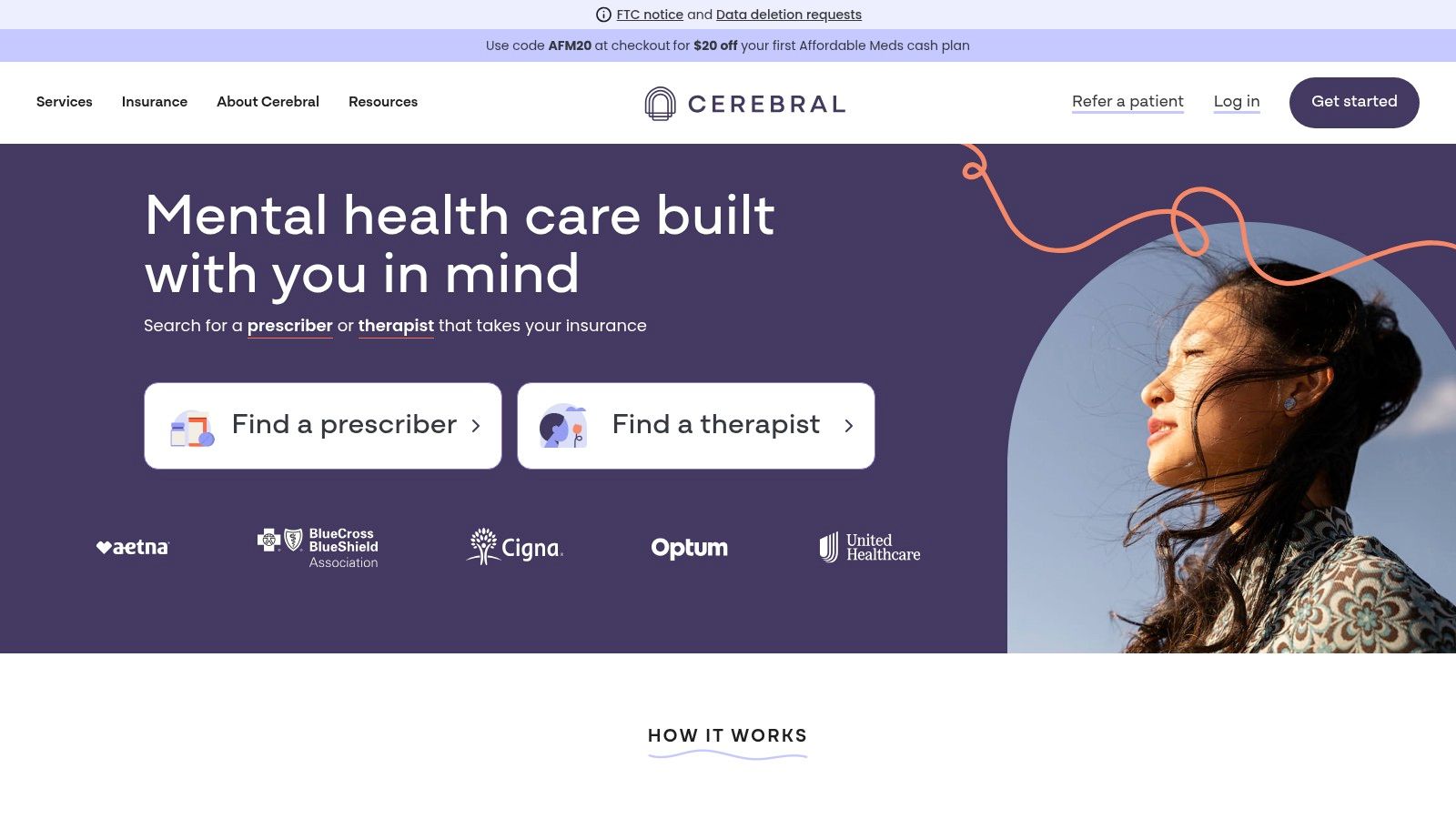
For performance and growth agencies, Cerebral's model presents a case study in navigating a highly regulated digital health sub-sector. The platform’s approach to patient acquisition for both therapy and medication management requires a delicate balance of direct-to-consumer marketing with stringent adherence to healthcare compliance. For example, marketing campaigns must avoid making unsubstantiated treatment claims, a key learning from the industry's past regulatory challenges.
Platform Features & User Experience
Cerebral's user journey is designed for simplicity and speed, often allowing patients to schedule their first appointment within days. The platform offers distinct plans that cater to different needs, from medication-only to comprehensive care bundles, making it a flexible choice among mental health startups.
- Service Tiers: Users can choose from several subscription plans: Medication + Care Management (monthly prescriber check-ins), Therapy (weekly sessions), or a combined Medication + Therapy plan for integrated treatment.
- Coordinated Care: The key differentiator is the potential for seamless communication between the prescriber and therapist, ensuring a holistic treatment strategy. Prescriptions can be shipped directly to the user’s home or sent to a local pharmacy.
- Pricing & Access: Plans feature clear, published monthly pricing. While the cost of medication is separate, the subscription fees are often eligible for HSA/FSA payments. Discounts are frequently available for multi-month commitments.
Agency Opportunities & Outreach Hooks
Cerebral’s past challenges with industry and regulatory scrutiny create a significant opportunity for agencies specializing in compliance, public relations, and brand reputation management. Their significant funding history, which you can read about in this overview of Cerebral's funding rounds, indicates they have the capital to invest in rebuilding and reinforcing their market position. Recruitment agencies should also note their ongoing need for licensed prescribers (NPs, MDs) and therapists to service their user base across different states.
Key Insight: The platform's history of regulatory scrutiny presents a clear opening for crisis management and corporate communications firms. Pitching strategies focused on transparent communication, rebuilding patient trust, and highlighting enhanced compliance protocols would be highly relevant. A practical example would be proposing a series of blog posts or a whitepaper detailing their improved clinical governance standards.
Website: https://www.cerebral.com/
4. Headspace
As a pioneer in the consumer digital wellness space, Headspace carved out its niche by making mindfulness and meditation accessible to the masses. Now part of Headspace Health following its merger with Ginger, the platform serves as a low-cost, evidence-backed on-ramp to daily mental wellness routines. Its core value is providing a vast library of guided content designed to help users manage stress, improve sleep, and increase focus through simple, daily practices, with published studies showing it can reduce stress in as little as 10 days.
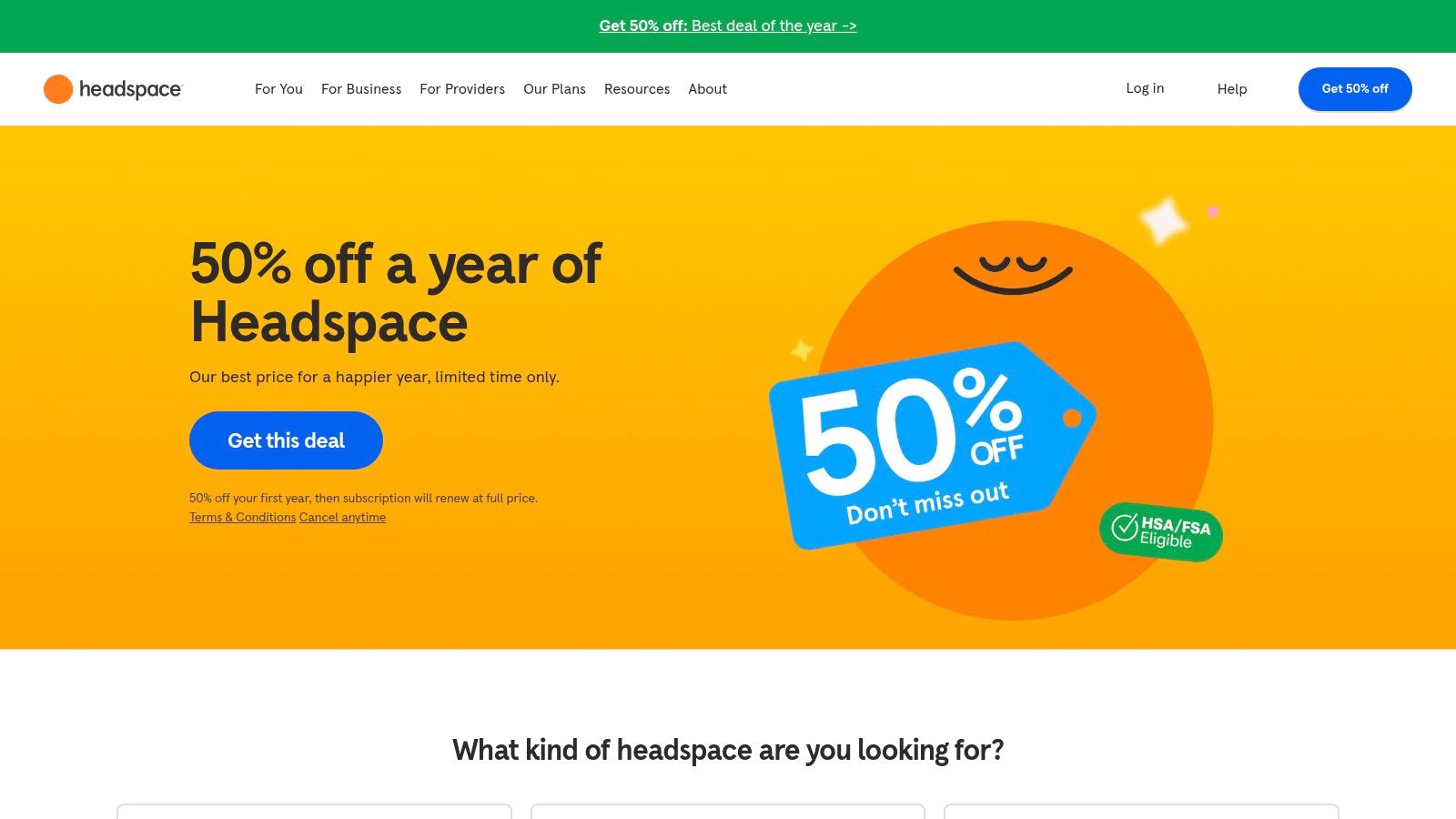
For growth and performance agencies, Headspace's evolution from a direct-to-consumer app to a comprehensive B2B enterprise solution (Headspace for Work) offers a compelling case study in market expansion. Its content-led growth strategy, partnering with major brands like Netflix and Spotify, provides a blueprint for leveraging intellectual property to achieve mainstream brand recognition. The company’s journey showcases how some of the most innovative Silicon Valley startup companies can successfully pivot and scale.
Platform Features & User Experience
Headspace is renowned for its polished, intuitive user experience and high-quality, research-backed content library. The user journey is designed to be gentle and encouraging, guiding individuals from foundational meditation techniques to more advanced practices for specific life challenges. Its highly polished app design and calming aesthetic are key to its user retention.
- Content Library: Users gain access to over 1,000 hours of content, including guided meditations, "Sleepcasts" (soothing bedtime stories), focus music playlists, and mindful movement exercises.
- Structured Courses: The platform offers structured, multi-day courses on topics like managing anxiety, navigating change, and improving self-esteem.
- Pricing & Access: Standard consumer pricing is typically $12.99 per month or a discounted $69.99 per year. Student and Family plans offer further discounts. While primarily a self-pay service, it is increasingly offered as a free benefit through employers and health plans.
Agency Opportunities & Outreach Hooks
Headspace Health's continuous integration of Headspace (wellness) and Ginger (on-demand therapy and coaching) creates numerous opportunities. Tech and automation experts can pitch services related to data integration, creating a unified user experience across the two platforms, and leveraging AI to personalize content recommendations based on a user's entire wellness journey. Recruitment agencies should note their consistent need for roles in B2B sales, enterprise account management, and clinical operations as they expand their corporate partnerships.
Key Insight: The merger has created a complex product ecosystem. Creative and branding agencies have a clear opportunity to pitch campaigns that simplify the value proposition of the combined Headspace Health offering, clarifying for both consumers and enterprise clients how the mindfulness app and the teletherapy service work together as a complete mental health solution.
Website: https://www.headspace.com/
5. Calm
Calm has cemented its position as a household name in the wellness space by championing mindfulness, meditation, and sleep as foundational pillars of mental well-being. Unlike platforms focused on clinical therapy, Calm targets the broader consumer market with a content-rich application designed to reduce stress and improve sleep quality. With over 100 million downloads, its widespread adoption and brand recognition make it a key player among mental health startups focused on prevention and daily mental fitness.
For growth and performance agencies, Calm’s B2C and B2B (Calm for Business) strategies offer a masterclass in content marketing and partnership-led growth. Their use of celebrity narrators like Matthew McConaughey and Harry Styles for their "Sleep Stories" has generated immense organic buzz, providing a powerful case study in leveraging influencer talent to drive mainstream adoption of a wellness product.
Platform Features & User Experience
Calm's model is a freemium subscription service, offering a vast library of audio content accessible through a simple, aesthetically pleasing interface. The user experience is designed to be soothing and intuitive, encouraging daily engagement and habit formation around mindfulness practices.
- Core Content Library: The platform is best known for its "Sleep Stories," guided meditations, and "Daily Calm" sessions. It also features an extensive library of calming music, nature soundscapes, and breathing exercises.
- Expanded Offerings: Calm has expanded into video content with "Calm Body" sessions, which feature gentle stretching and movement, as well as masterclasses taught by mindfulness experts.
- Pricing & Access: A premium subscription typically costs $69.99 per year or a $399.99 lifetime membership, with family plans available. The app offers a free version with limited content, serving as a powerful lead magnet for its premium offering.
Agency Opportunities & Outreach Hooks
Calm’s continued expansion into new content verticals creates numerous opportunities. Content and production teams can pitch original concepts for Sleep Stories, guided meditations, or even animated shorts for "Calm Kids." Their high-profile celebrity partnerships indicate a significant budget and appetite for premium, well-produced audio and video content. Recruitment agencies should note their hiring for roles in content production, product management, and B2B sales as they expand their corporate wellness arm.
Key Insight: Calm’s push into corporate wellness (Calm for Business) creates a clear opening for B2B marketing agencies. Pitching strategies focused on lead generation, account-based marketing, and creating compelling case studies for HR and benefits leaders could be highly effective. This is a strategic pivot from their core D2C model, requiring a different marketing muscle.
Website: https://www.calm.com/
6. Apple App Store (iOS)
While not a startup itself, Apple's App Store is arguably the most critical distribution channel and discovery platform for the entire mobile-first mental health ecosystem. It serves as the primary gateway for millions of users to find, evaluate, and subscribe to leading apps like Calm and Headspace, as well as emerging innovators. The platform's curated collections and editorial features often dictate which mental health startups gain initial traction and visibility, making it a powerful gatekeeper and growth engine. For example, being featured as "App of the Day" can result in a download spike of over 800%.

For growth and performance agencies, the App Store is the ultimate battleground for user acquisition. Understanding its algorithm, App Store Optimization (ASO) best practices, and the impact of user ratings and reviews is fundamental to scaling any consumer-facing mental health app. The platform's transparent privacy labels also provide a unique angle for marketing and branding agencies to differentiate their clients.
Platform Features & User Experience
The App Store provides a standardized yet powerful framework for discovering and managing mental wellness apps. The user journey is centered on search and editorial discovery, leading to detailed product pages that consolidate all the key information a potential user needs to make a decision.
- Discovery & Curation: Users can find apps through direct search or by browsing editorial collections like "Apps for Mindfulness" or "Mental Wellness." These features provide significant exposure for selected startups.
- Evaluation Tools: Each app page includes user ratings, written reviews, screenshots, and developer information. Crucially, Apple’s mandatory "App Privacy" labels detail exactly what data an app collects, offering a clear point of comparison.
- Subscription Management: Users can start free trials and subscribe using their Apple ID, with all billing consolidated. This simplifies the process and provides a centralized place within iOS settings to manage or cancel subscriptions, a key feature for user trust and convenience. In-app purchase prices can sometimes be higher than web-based subscriptions to account for Apple's commission.
Agency Opportunities & Outreach Hooks
The App Store ecosystem is a rich environment for specialized agencies. ASO agencies and user acquisition experts are in constant demand to help mental health apps improve their visibility and conversion rates. Key activities include optimizing keywords, app icons, screenshots, and running Apple Search Ads campaigns. For example, A/B testing different screenshot styles can increase conversion rates by up to 25%.
Key Insight: The introduction of more stringent privacy reporting and the upcoming launch of new OS features create ongoing opportunities. Tech and legal consulting firms can pitch services to help startups navigate App Store guideline changes, ensuring compliance with data handling rules and leveraging new iOS APIs for health and wellness tracking.
Website: https://apps.apple.com/us/search?term=mental%20health
7. Google Play (Android)
While not a startup itself, the Google Play Store is the primary ecosystem where hundreds of Android-focused mental health startups launch, compete, and scale. For agencies and investors, it serves as a dynamic, real-time database for market research, competitor analysis, and identifying emerging players in areas like digital therapeutics, meditation, AI-powered chatbots (like Wysa and Woebot), and mood journaling. It’s the gateway for reaching a massive global user base, with Android holding over 70% of the worldwide mobile operating system market share.
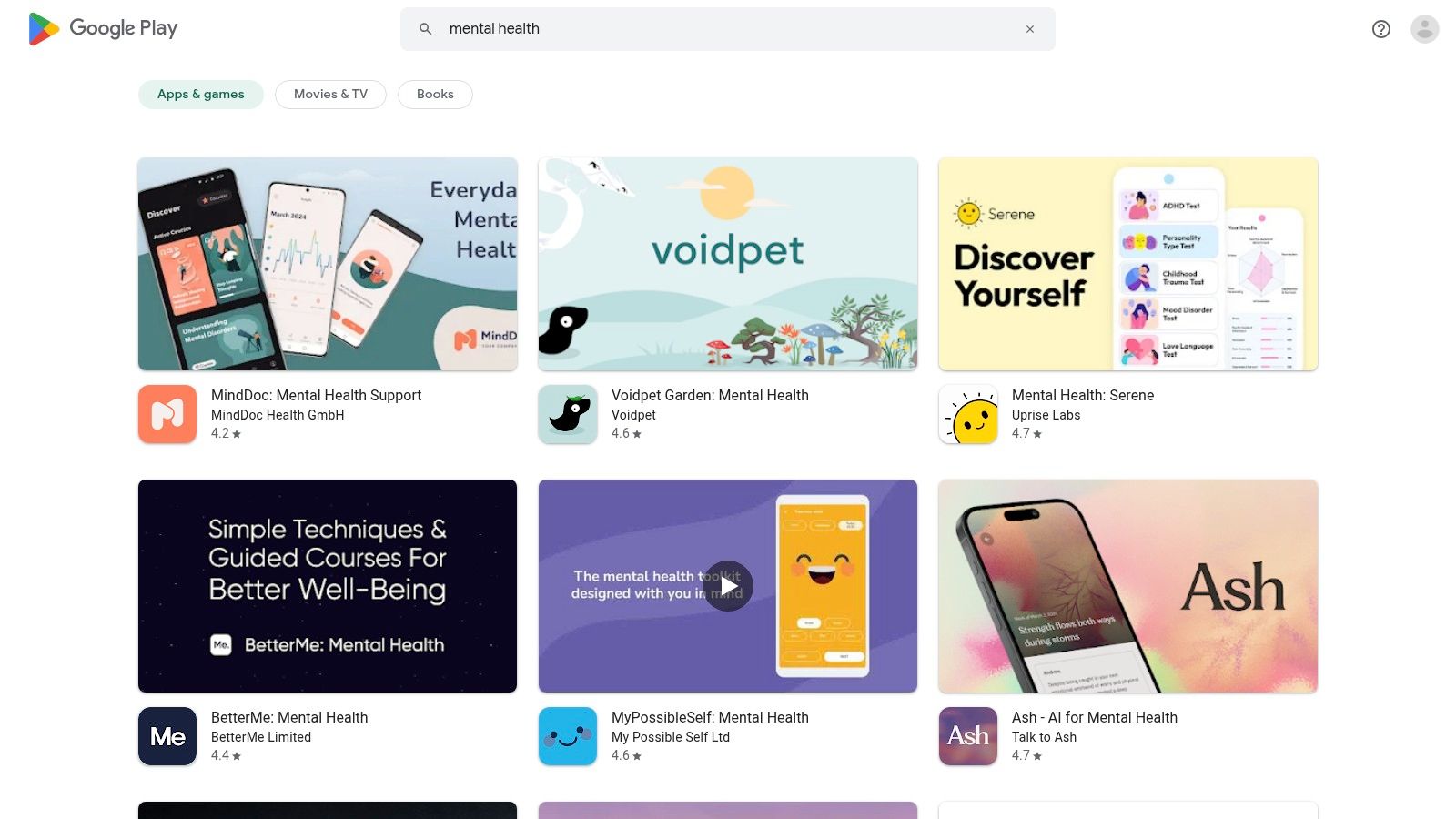
For growth and performance marketing agencies, the platform is a critical battleground. Success is determined by visibility, user reviews, and download velocity. For mental health startups looking to boost their app's visibility and downloads on the Android platform, mastering the principles of Google Play ASO is essential. Analyzing top-performing apps in the "Health & Fitness" category provides a clear blueprint for effective app store optimization, from keyword strategy to compelling visual assets.
Platform Features & User Experience
The Google Play Store functions as the definitive catalog for Android apps, offering a structured environment for discovery and management. The user journey involves searching for specific needs, browsing curated collections, reading user reviews, and making download or subscription decisions based on the app's storefront presentation.
- Broad Android Catalog: The store features a vast selection of mental health apps, ranging from well-funded leaders to early-stage, niche startups, offering a complete view of the market.
- Data Safety & Reviews: Each app listing includes a "Data safety" section where developers must disclose how they collect and use user data. This transparency, combined with user ratings and detailed reviews, is crucial for building trust in the sensitive mental wellness space.
- Pricing & Access: Most apps operate on a freemium model, offering a basic free version with in-app purchases or subscriptions for premium features. These subscriptions are managed through a unified Google billing system, and costs can range from $5 to $30 per month depending on the app's complexity.
Agency Opportunities & Outreach Hooks
The Google Play Store is a rich source of leads and insights for nearly every type of agency. Marketing agencies can identify startups with high download counts but low ratings, signaling a potential need for UX/UI improvements or better in-app engagement strategies. Analyzing an app’s update frequency (e.g., via app intelligence tools like App Annie) can also reveal how actively it is being developed, a key indicator for tech and automation experts.
Key Insight: A significant opportunity lies in the "Data safety" section. Creative and branding agencies can approach startups with vague or poorly explained data policies and pitch projects to create clearer, more user-friendly messaging. This helps build trust and can be a key differentiator in a crowded market, directly impacting conversion rates.
Website: https://play.google.com/store/search?q=mental%20health&c=apps&hl=en_US
Top 7 Mental Health Startups Comparison
| Service | Implementation complexity 🔄 | Resource requirements ⚡ | Expected outcomes 📊 | Ideal use cases 💡 | Key advantages ⭐ |
|---|---|---|---|---|---|
| BetterHelp | 🔄 Low — quick online signup & therapist matching | ⚡ Moderate — subscription (~$70–$100/week billed every 4 weeks), reliable internet | 📊 Continuous talk therapy access; ⭐ Good for general outpatient therapy | 💡 Users needing fast access to licensed therapists without insurance navigation | ⭐ Large therapist pool; flexible formats (video/phone/chat); easy switching |
| Talkspace | 🔄 Low–Moderate — select plan tier and match | ⚡ Variable — tiered pricing, optional insurance coverage, internet | 📊 Mix of messaging + live sessions; ⭐ Suited for text-first care and psychiatry access | 💡 Users preferring messaging-first plans or who want psychiatry/insurance options | ⭐ Multiple plan tiers; transparent psychiatry pricing; insurer partnerships |
| Cerebral | 🔄 Moderate — coordination of medication management + therapy | ⚡ Moderate — monthly management fees + medication costs; internet | 📊 Coordinated med + therapy outcomes; ⭐ Effective for medication-focused treatment | 💡 Users needing prescription management combined with therapy | ⭐ Clear published pricing; fast scheduling; bundled med+therapy options |
| Headspace | 🔄 Very low — app subscription, self-guided programs | ⚡ Low — monthly/annual fee; minimal daily time commitment | 📊 Improved mindfulness, sleep and habit formation; ⭐ Good for mild symptoms/wellness | 💡 Building daily mental‑wellness routines or supplementing therapy | ⭐ Large evidence-informed library; affordable annual pricing |
| Calm | 🔄 Very low — app subscription for content access | ⚡ Low — annual/one-time purchase options; device and internet | 📊 Better sleep/relaxation routines; ⭐ Strong sleep-focused outcomes | 💡 Users seeking sleep aids, relaxation, or therapy complements | ⭐ Excellent sleep & storytelling content; simple pricing and promos |
| Apple App Store (iOS) | 🔄 Low — curated discovery and subscription flow | ⚡ Low — iPhone/iPad + Apple ID; in-app purchases via Apple billing | 📊 Broad app access and consolidated subscriptions; ⭐ Strong review/privacy signals | 💡 Discovering, comparing and subscribing to iOS mental‑health apps | ⭐ Centralized billing, Family Sharing, privacy labels and editorial collections |
| Google Play (Android) | 🔄 Low — search and install via Play Store | ⚡ Low — Android device + Google account; unified billing | 📊 Wide app selection including niche startups; ⭐ Good for cross-device installs | 💡 Finding Android mental‑health apps, trials and freemium options | ⭐ Large catalog, Data Safety disclosures, easy installs across devices |
Final Thoughts
The landscape of mental health support is undergoing a profound transformation, driven largely by the innovative and well-funded mental health startups we've explored. From teletherapy giants like BetterHelp and Talkspace to mindfulness pioneers like Headspace and Calm, technology is dismantling long-standing barriers to access, making mental wellness more attainable than ever before. For agencies, investors, and job seekers, this sector represents not just a booming market, but a chance to contribute to a meaningful societal shift.
Our deep dive into these companies reveals a clear narrative: the future of mental health is digital, personalized, and increasingly integrated into our daily lives. The success of these platforms underscores a massive consumer demand for flexible and discreet mental health solutions.
Key Takeaways from the Mental Health Tech Boom
As we've seen, this isn't a monolithic industry. Understanding the nuances between different business models and user needs is critical for anyone looking to engage with this space.
- Diverse Models, Common Goal: The primary split is between direct therapy providers (BetterHelp, Talkspace) and self-guided wellness apps (Headspace, Calm). While their approaches differ, they both aim to empower users to take control of their mental well-being. Agencies must tailor their pitch accordingly; a B2B SaaS provider’s strategy for Calm will differ vastly from a recruitment agency's approach to Cerebral.
- The Power of Platforms: The inclusion of the Apple App Store and Google Play is intentional. These platforms are not just distribution channels; they are the gatekeepers and kingmakers of the mobile health world. Their policies, discovery algorithms, and user review systems directly impact the visibility and viability of every single mental health app. For developers building the next wave of tools, mastering these ecosystems is non-negotiable. For instance, understanding the specific guidelines for health and wellness apps can be crucial; for those developing on Android, resources like the official Google Play Store documentation are invaluable for navigating compliance and maximizing reach.
- Data as a Driver: A key trend uniting these startups is the sophisticated use of data. From personalizing user journeys and matching patients with therapists to tracking engagement metrics that inform product development, data is the engine of growth. This presents a massive opportunity for tech and automation experts who can help these companies refine their data strategies, improve their machine learning models, or enhance their cybersecurity posture.
Actionable Next Steps: Finding Your Niche
For our audience of agencies, professionals, and investors, the path forward requires a strategic approach. Generic outreach will not cut it in this competitive and mission-driven field.
- Define Your Value Proposition: How does your service specifically address the challenges or opportunities within the mental health tech space? A branding studio might focus on building trust and conveying empathy, while a performance marketing agency could highlight its experience with HIPAA-compliant advertising and sensitive user acquisition.
- Align with Company Mission: These are not just tech companies; they are mental health startups with a core mission. Your outreach should demonstrate a genuine understanding of their purpose. Reference specific features, campaigns, or user testimonials that resonate with you.
- Follow the Funding and Growth Signals: As highlighted throughout this article, funding rounds, hiring spikes, and product launches are critical entry points. A recent Series B funding round at a company like Cerebral signals an imminent need for scaling teams, expanding marketing efforts, and investing in new technology, creating a window of opportunity for various service providers.
Ultimately, the mental health technology sector offers a unique intersection of purpose and profit. The companies leading the charge are not only building successful businesses but are also fundamentally changing how we perceive and manage our mental well-being. By approaching this market with tailored insights, a clear value proposition, and an appreciation for its mission, you can find your place within this vital and expanding ecosystem.
Ready to turn these insights into opportunities? Stop manually tracking funding rounds and hiring trends. FundedIQ provides you with a curated, real-time database of the fastest-growing mental health startups, complete with verified decision-maker contacts and actionable outreach triggers. Find your next client or career move with FundedIQ today.